Local SEO for Dentists in 2026: The Map Pack Playbook (Relevance, Distance, Prominence)
The Map Pack is where most new dental patients decide who to call. This playbook shows how to improve relevance and prominence to win more local visibility.
New Block Team
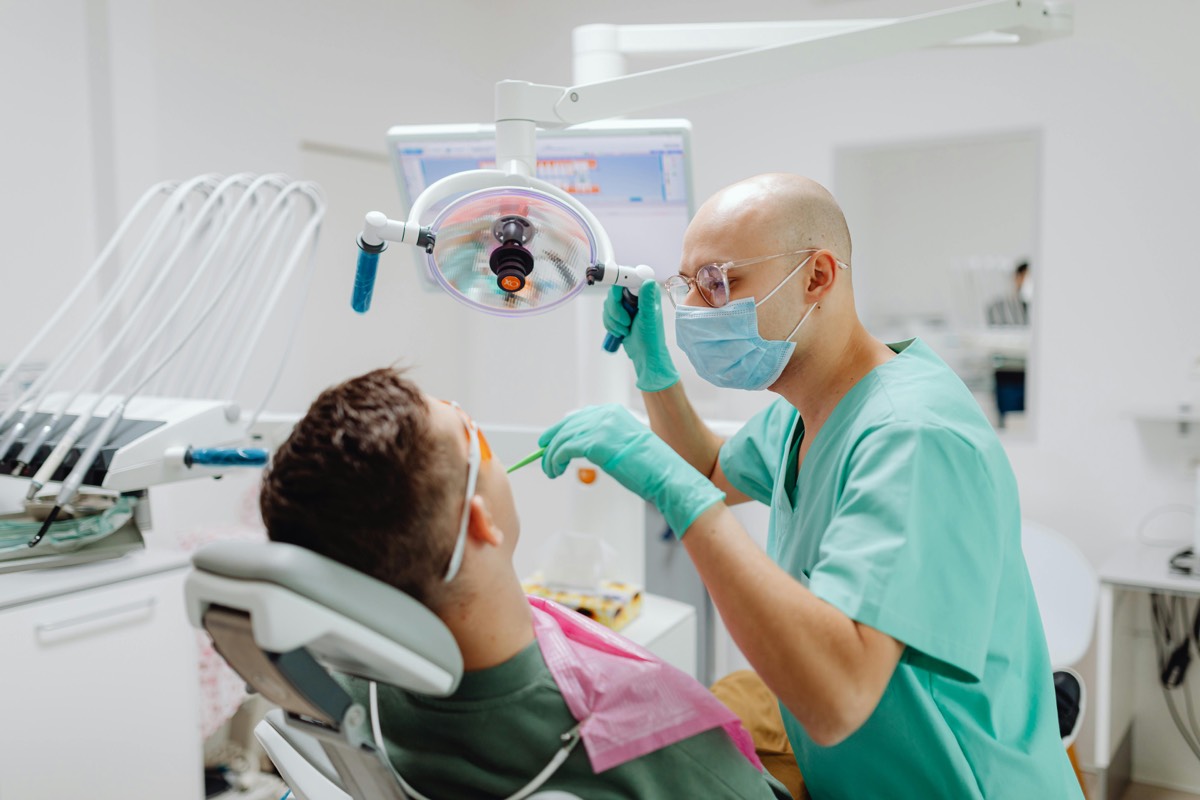
Right now, someone two miles from your practice is searching “dentist near me.” Whether your phone rings or your competitor’s does comes down to three words: relevance, distance, and prominence.
Those are Google’s stated ranking factors for the Map Pack, the block of three local results that appears above everything else when patients search for a nearby dentist. Most practice owners miss one key point: you can’t control distance, but you can control relevance and prominence. Those two factors alone can move rankings, even against older competitors.
Practices that consistently win the Map Pack are not always spending more on ads. They are executing the fundamentals and doing them consistently.
This is the playbook.
What Is the Google Map Pack and Why Does It Matter for Dentists?
The Map Pack (also called the Local 3-Pack) is the block of three business listings under a map at the top of Google results for local intent searches.
For searches like “dentist near me,” “emergency dentist,” or “Invisalign in [city],” it appears before organic website listings. That placement drives calls, direction requests, and appointment bookings.
Practices outside the top three are often invisible for high-intent local searches.
How Does Google Decide Which Dentists Show Up in the Map Pack?
Google uses three core local ranking factors:
- Relevance: how well your practice matches the query. Signals include your Google Business Profile categories, services, website content, and language consistency.
- Distance: how close your location is to the searcher. You cannot control this directly.
- Prominence: overall reputation and authority. Signals include reviews, citation consistency, backlinks, and profile activity.
Distance is fixed. Relevance and prominence are where execution wins.
What Is a Google Business Profile and How Do You Optimize It for Dentists?
Your Google Business Profile (GBP) is the most important local SEO asset for dental practices.
A high-performing dental GBP should include:
- Primary category:
Dentist(mandatory for most practices) - Secondary categories: only for real services offered, such as
Cosmetic Dentist,Pediatric Dentist,Emergency Dental Service, orDental Implants Provider - Complete service list: add clear, patient-friendly descriptions for each service
- Exact NAP consistency: name, address, and phone must exactly match your website and directory listings
- Fresh photo uploads: office exterior, team, treatment rooms, and patient-facing spaces
- Weekly GBP posts: offers, updates, educational content, and service highlights
- Q&A coverage: real patient questions with direct, practical answers
- Online booking link: reduce friction from search to scheduled appointment
Why Aren’t You Showing Up in the Map Pack? Common Root Causes
Most Map Pack underperformance comes from repeatable issues:
- Incomplete or inactive GBP
- Inconsistent NAP across directories
- Weak review count or poor review recency
- Website that does not support local/procedure relevance
- Missing citations in major dental and local directories
Fixing these usually drives measurable movement before advanced tactics.
How Do Reviews Affect Map Pack Rankings for Dentists?
Reviews affect both ranking and conversion:
- Ranking signals: review quantity, recency, and response behavior
- Conversion signals: patients compare recent, specific reviews before calling
For compliance, responses must remain HIPAA-safe:
- Do not confirm someone is a patient
- Do not reference treatment details
- Keep responses warm and general
For growth, focus on compliant review velocity:
- Ask every patient consistently
- Use a direct review link via text/email
- Never buy, fake, or manipulate reviews
What Is Citation Building and Why Does It Matter for Dental SEO?
Citations are mentions of your practice NAP across third-party sites. Google uses them as trust and verification signals.
Prioritize two citation groups:
- General directories: Yelp, Bing Places, Apple Maps, Facebook, BBB, Yellow Pages
- Dental/health directories: Healthgrades, Zocdoc, Vitals, 1-800-Dentist, WebMD, RateMDs
Run citation audits at least quarterly. A single stale listing with wrong phone/address can hurt both ranking and conversions.
How Does Your Website Support or Hurt Your Map Pack Rankings?
Google cross-checks your website against your GBP. A weak site can suppress local results even with a solid profile.
Website requirements for stronger Map Pack support:
- Dedicated service pages for high-value procedures (not one generic services page)
- Location-aware copy in titles, metadata, and on-page text
- Fast mobile performance for phone-first search behavior
- LocalBusiness/Dentist schema so Google can parse entities and services accurately
How Are Patients Finding Dentists in 2026 Beyond Google Search?
Patients increasingly discover practices through AI assistants and aggregated reputation sources before visiting a website.
When users ask tools like ChatGPT or Perplexity for dental recommendations, those systems often rely on public signals such as:
- Google reviews and ratings
- Yelp and healthcare directory profiles
- Reddit and forum discussions
- YouTube educational content
Practical takeaway: local visibility now includes multi-platform reputation. Strong profiles and useful content beyond Google improve recommendation probability.
Local SEO for Multi-Location Dental Practices and DSOs
Multi-location groups face execution complexity, not strategy complexity.
Common failure points:
- Duplicate or near-duplicate location pages
- Inconsistent GBP standards across locations
- Uneven review velocity across offices
- Duplicate/outdated citations after moves or openings
For DSOs and groups, standardize process and governance across every location.
Frequently Asked Questions About Local SEO for Dentists
How long does it take to rank in the Google Map Pack?
Most practices see meaningful improvement in 3 to 6 months with consistent optimization and review generation.
How many reviews does a dental practice need to compete?
It depends on market density. In competitive metros, top listings often have large review volume. In smaller markets, lower volume with strong recency can still win.
Can I have a Google Business Profile for each dentist at my practice?
Yes. One profile for the practice location, plus eligible practitioner profiles for individual dentists. Manage carefully to avoid internal competition and inconsistent data.
Which directories should dental practices prioritize first?
Start with Healthgrades, Zocdoc, Vitals, 1-800-Dentist, WebMD, RateMDs, then complete general local listings like Yelp, Bing Places, Apple Maps, and Facebook.
Does social media directly affect Map Pack rankings?
Not directly as a primary ranking factor, but it can improve brand demand and off-platform visibility that contributes to prominence.
What is the difference between local SEO and regular SEO for dentists?
Local SEO is focused on Google Maps/Map Pack and local-intent discovery. Traditional SEO targets broader organic results. Dental practices need both, but local usually drives the most immediate appointment demand.
Related Topics to Explore
- Google Ads + Local Services Ads for Dentists: what to track to prove ROI
- Dental Website + Online Booking Conversion: from click to scheduled patient
- Reputation and Reviews for Dentists: building a compliant review engine
- Multi-Location Dental SEO: scaling listings, location pages, and reviews without duplicates
- Fee-for-Service Transition Marketing: dropping PPOs without tanking growth
The Bottom Line
The Map Pack is where many dental patients make the call decision. You control two of the three ranking factors: relevance and prominence.
A complete and active GBP, exact NAP consistency, steady review velocity, and service-specific website architecture are the baseline. None of this is complex, but all of it requires consistent execution.
Start with GBP optimization, run a citation audit, implement a repeatable review workflow, and track outcomes that matter: calls, direction requests, and booked appointments.
If you want a fast starting point, run a Map Pack visibility audit against top local competitors and prioritize fixes by impact.